
Yacht Armor™ marine protection film blocks UV fade, calcium etching, and trailer rash — and heals its own scratches. Installed in our controlled shop environment, because film this good deserves better than a dusty driveway.
Tell us about your boat and we'll send you a real number. No pressure, no pushy follow-up.
We boat at six thousand feet, on some of the hardest water in the country, towing through canyons to get there — and we cram it all into about five months. Utah asks a lot of a hull in a short window, and most owners don't see what it's costing them until the boat is three seasons old and the shine won't come back.
UV intensity climbs roughly 10–12% for every 1,000 meters you gain. Jordanelle sits at 6,100 ft, Bear Lake at 5,900. There's simply less atmosphere between your gelcoat and the sun up here — and the water throws half of it right back up at the hull.
Our mineral content is among the worst anywhere. Every splash that dries on the hull leaves calcium behind, and left alone it etches down into the gelcoat. Once it's etched, no amount of washing brings it back — that's a wet sand.
Nobody keeps a slip here — your boat lives on a trailer and earns every mile of Parleys, Provo Canyon, and the long haul to Powell. Rock chips, sand blast, and bug strike land on the bow and hull sides before you ever hit the water.
Half the year your boat sits under a cover in a storage unit or behind the garage. Oxidation doesn't take the winter off — it works quietly, with nobody looking, and shows up as chalk in May.
Yacht Armor™ is a physical film barrier over your gelcoat — not a coating that sits on it. It takes the sun, the calcium, and the rocks so your gelcoat doesn't have to. Your boat gets to spend its five months looking like it did the day you brought it home.
Both end up on the same trailer behind the same truck on the same canyon road. But what actually chews up the finish is different, and so is the coverage that makes sense.
Usually starts with: transom, then hull sides.
Usually starts with: gunwale caps and bow.
Yacht Armor goes on any smooth surface — gelcoat or painted aluminum. If your boat has a finish worth keeping, we can protect it, and we'll tell you which panels are actually worth doing on your boat rather than selling you the whole thing.
It's a thick, optically clear urethane film — the marine-engineered cousin of the paint protection film that goes on new Porsches — laid over your transom, hull sides, top cap, and any smooth surface on the boat.
It is not a ceramic coating. A ceramic coating is a sacrificial chemical layer measured in microns — it makes water bead and wears off in 12–18 months. Yacht Armor is measured in mils, absorbs physical impact, and self-heals surface scratches with heat. Different category of product entirely.
Salty Mountain Detail & Protection is the only certified Yacht Armor dealer and installer in Utah, and a trusted partner to MasterCraft Boats of Utah. Film goes on at our shop — the material has to be laid in a controlled, dust-free environment, and anyone offering to wrap your hull in a driveway is going to trap grit under it permanently. Boat detailing and ceramic coating we'll bring to you.
Most shops that will wrap your boat are using automotive PPF — the same paint protection film that goes on the front end of a new truck. Not because it's the right material, but because it's the film they already stock and already know how to install.
Car film was engineered for something that lives in the air and occasionally gets rained on. A boat lives half its life submerged, in water carrying minerals and algae, under UV reflecting off the surface. Different problem, different material.
Yacht Armor is one of the only films actually engineered for marine use. That's the reason we carry it, and it's a fair question to ask anyone else who quotes you.
Yacht Armor was developed in Largo, Florida, for offshore sportfishers — boats that live in salt, year-round, in the most corrosive environment a hull can sit in. That's the standard the material was built to survive.
Utah doesn't ask that much of it. Our water won't corrode your hardware the way the ocean does. What it will do is bake your gelcoat under thin-air UV and cake it in calcium — and a film specified to hold up against saltwater has enormous margin left over for that. You're not getting a product that barely handles Utah. You're getting one that's overqualified for it.
| Wax | Ceramic Coating | Yacht Armor™ MPF | |
|---|---|---|---|
| Lifespan | 2–3 months | 12–18 months, longer if rejuvenated | 5–7 years |
| Where it starts | Part of a detail | From $1,530 full exterior | From $900 transom |
| Blocks UV fade | Minimal | Partial | Yes |
| Resists hard-water etching | No | Partial | Yes |
| Stops rock chips & trailer rash | No | No | Yes |
| Self-heals scratches | No | No | Yes |
| Guarantee | No | Varies | 3 years |
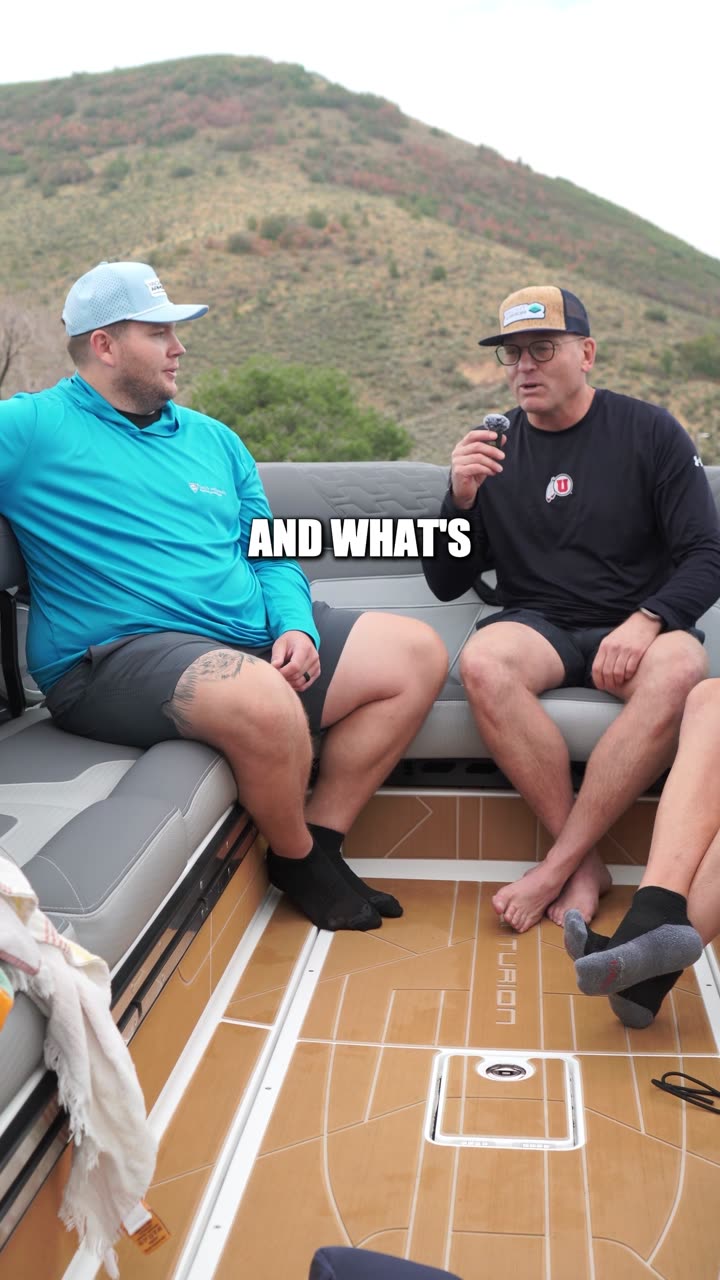
"I thought it would maybe reduce the shine. My brother looked out, called me and said, 'Rick, your boat was just glistening.'"
Rick keeps his Centurion on Deer Creek. His worry going in was the one almost everybody has — that a film would dull the finish. It didn't.
He also put it through the most Utah test there is. Deer Creek had a serious algae bloom that week, and the muck on his hull sides, in his words: "wiped off, easy, no problems."
Unscripted. Unedited. Tap to watch.
"Exceptional product and exceptional service! Highly recommend these guys to instal Yacht Armor. The installation was great, communication superior, and the result was outstanding."
"Love my marine protection film on my Axis boat from Salty mountain. Makes it so much easier to wipe down also protected it all week in the hot lake Powell sun. The installers were so friendly and great!"
"I had Yacht Armor installed on my boat here at Salty Mountain Marine Protection, and the results are incredible. The team was super knowledgeable and explained the whole process in detail."
Utah's thin air and reflected water glare fade gelcoat and outboard cowlings faster than almost anywhere in the country. Yacht Armor blocks the UV before it reaches the surface — your hull sides and motors look the way they did on the showroom floor five seasons in.
Formulated for constant water contact, not borrowed from automotive. The surface sheds water and mineral deposits instead of letting them bond, so Utah's hard water rinses off instead of etching in. Available in multiple thicknesses for different areas of the boat.
Dock bumps, ramp scuffs, and the scratches that come from loading a boat alone at dusk — the film closes them back up with heat from the sun. No buffing, no compounding, and no losing gelcoat every time you fix something.
Ceramic needs rejuvenating annually to keep going. Yacht Armor carries a 3-year warranty and a 5–7 year service life. Wash it and go. Fewer weekends on maintenance, more weekends on the water.
Optically clear and low-profile — nobody can tell it's there except that your boat looks newer than it should. On a wake boat that cost more than most trucks, that shows up again at resale.
We're the only factory-trained, certified Yacht Armor dealer and installer in the state, and a trusted partner to MasterCraft Boats of Utah. We're not learning on your boat.
No soap. No wax. No two hours with a buffer. Water hits a filmed hull and leaves — carrying the dirt and the mineral load with it instead of drying into spots you have to polish out later.
Every boat is different, so the honest answer is that we quote off your make, model, and how much coverage you want. But we're not going to make you fill out a form just to find out the ballpark.
Anti-glare, scratch-proof protection for your Garmin, Simrad, Furuno, or Raymarine display. Done in under an hour.
Exhaust staining, wake wash, and swim-deck traffic all land here. Same price on any boat 20–26 ft.
Everything above the rub rail — bow and gunwales, where sun exposure is most direct. Note that walking areas fall outside the manufacturer's warranty.
Rub rail to waterline, both sides. Largest visible surface, and the one taking the most UV and hard-water load.
Hull sides, top cap, transom, and interior. Full-boat jobs are worth walking in person — the number depends on your hull shape and how much smooth surface you've actually got. 801-750-4003 →
Prices shown are before sales tax. Utah sales tax is added to your final invoice.
Prices shown are for a 20–21 ft boat. Film is priced by coverage area, so larger hulls scale up — a 26-footer runs roughly 30% above the starting figure on length-based items. Transom, interior, and screens are flat rate at any size. Full-boat coverage we quote in person: there's too much variation in hull shape and smooth surface to put an honest number on it sight unseen, and we'd rather walk it with you than guess high.
Build it up over time. Lots of owners start with a screen or the transom, watch how it holds through a season, then add hull sides the following spring. The film is modular — no penalty for phasing it.
Film protects the panels that take hits. Two other things matter on a Utah boat — each has its own page, with full pricing by length.
Makes the whole boat shed water and wash in minutes. It pairs with film rather than replacing it — most owners end up doing both, film where the abuse happens and ceramic over everything else. Ceramic pricing →
If there's oxidation or etching already in the gelcoat, it has to come out first — film locks in whatever sits underneath it. We'll tell you honestly which order your boat needs, and correction booked alongside an install gets bundled. Boat detailing →
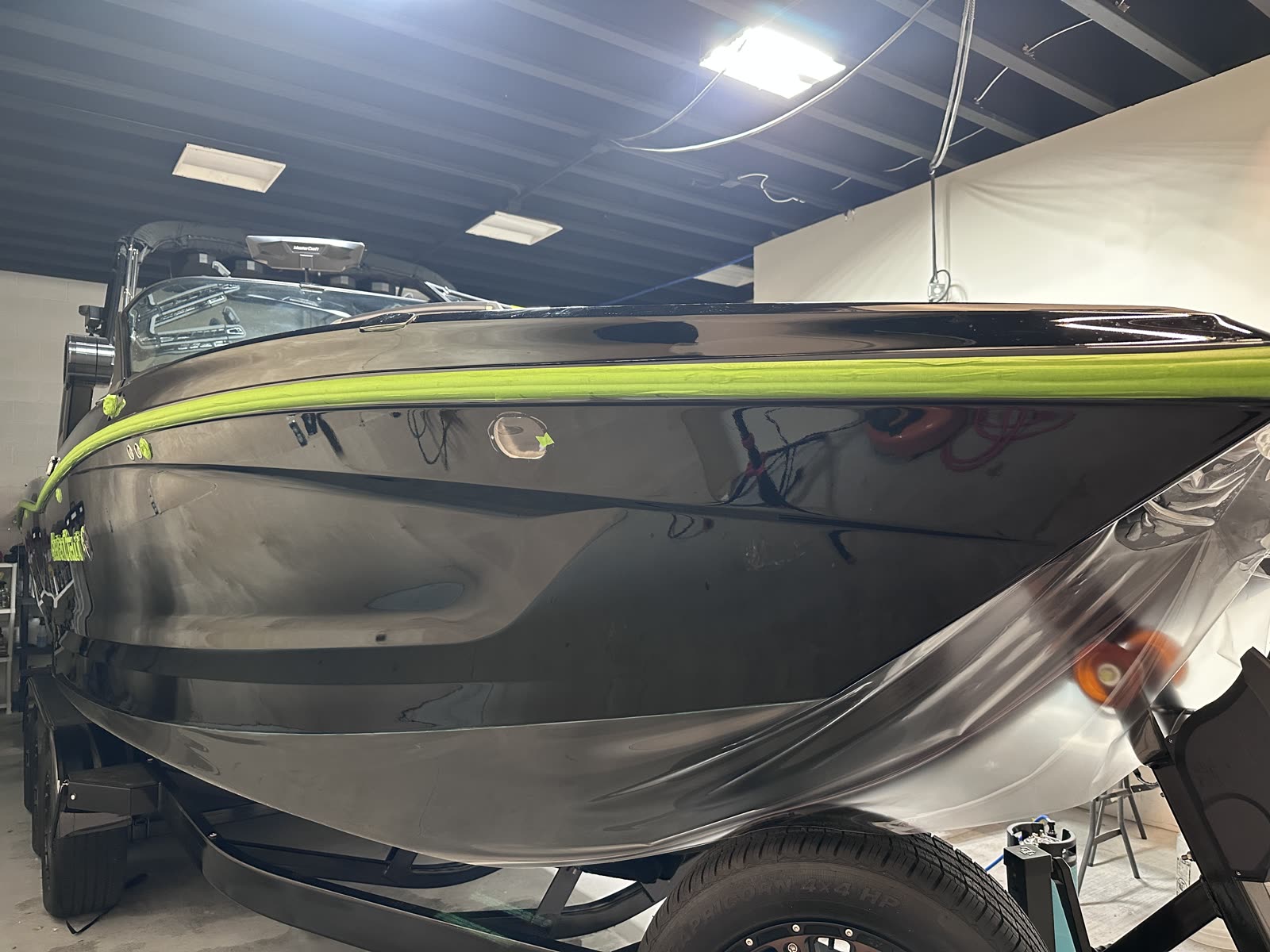
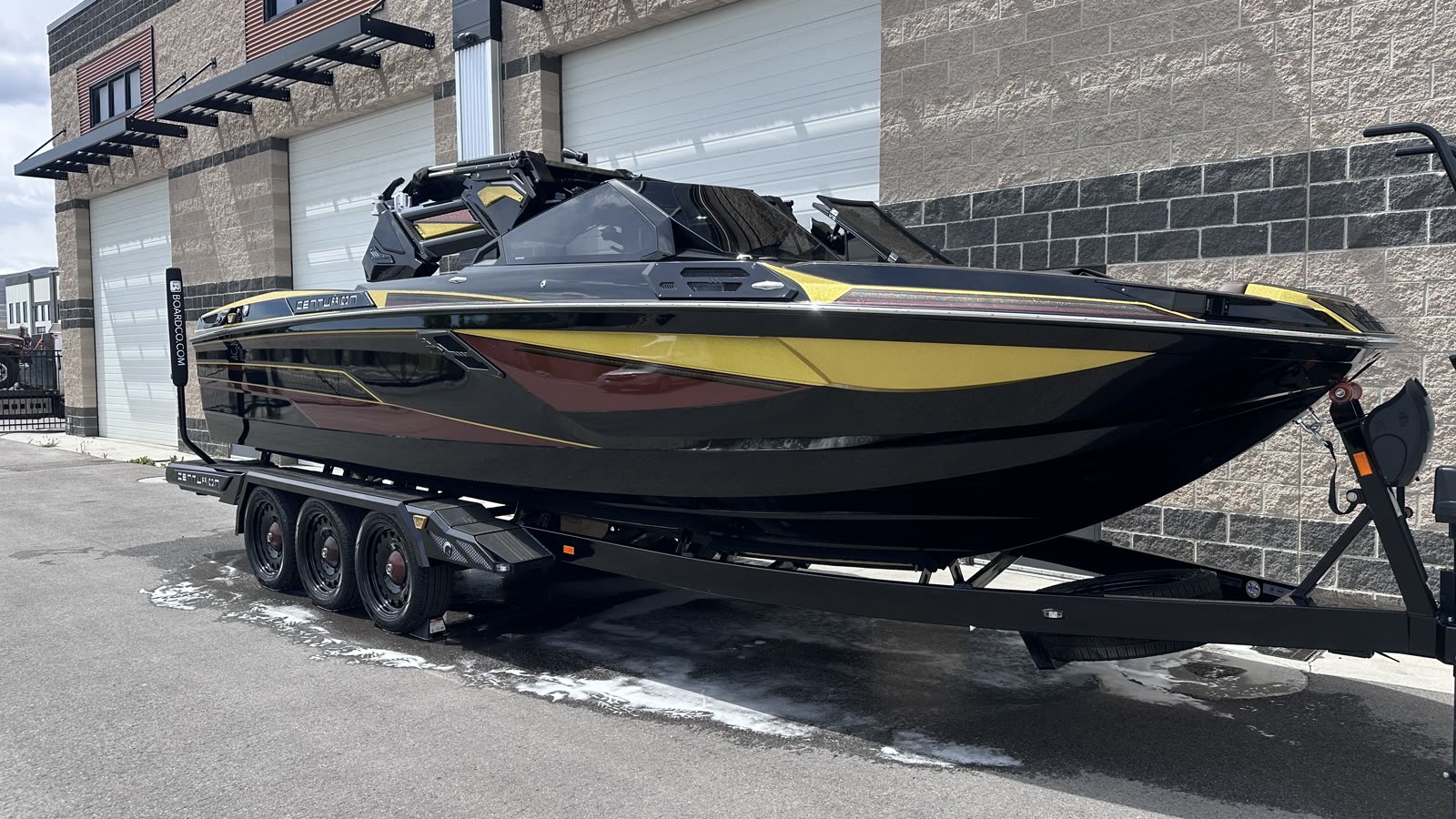
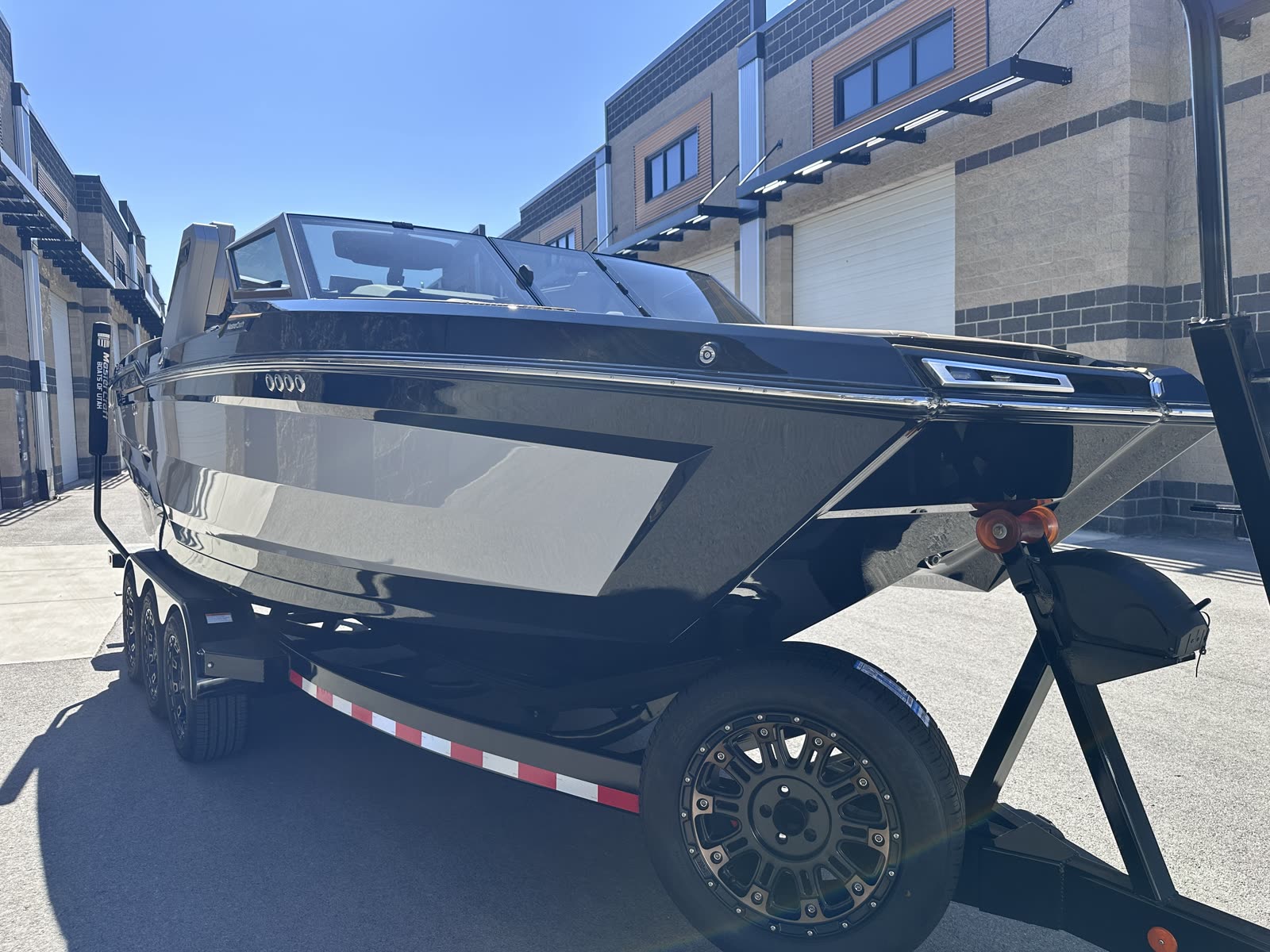
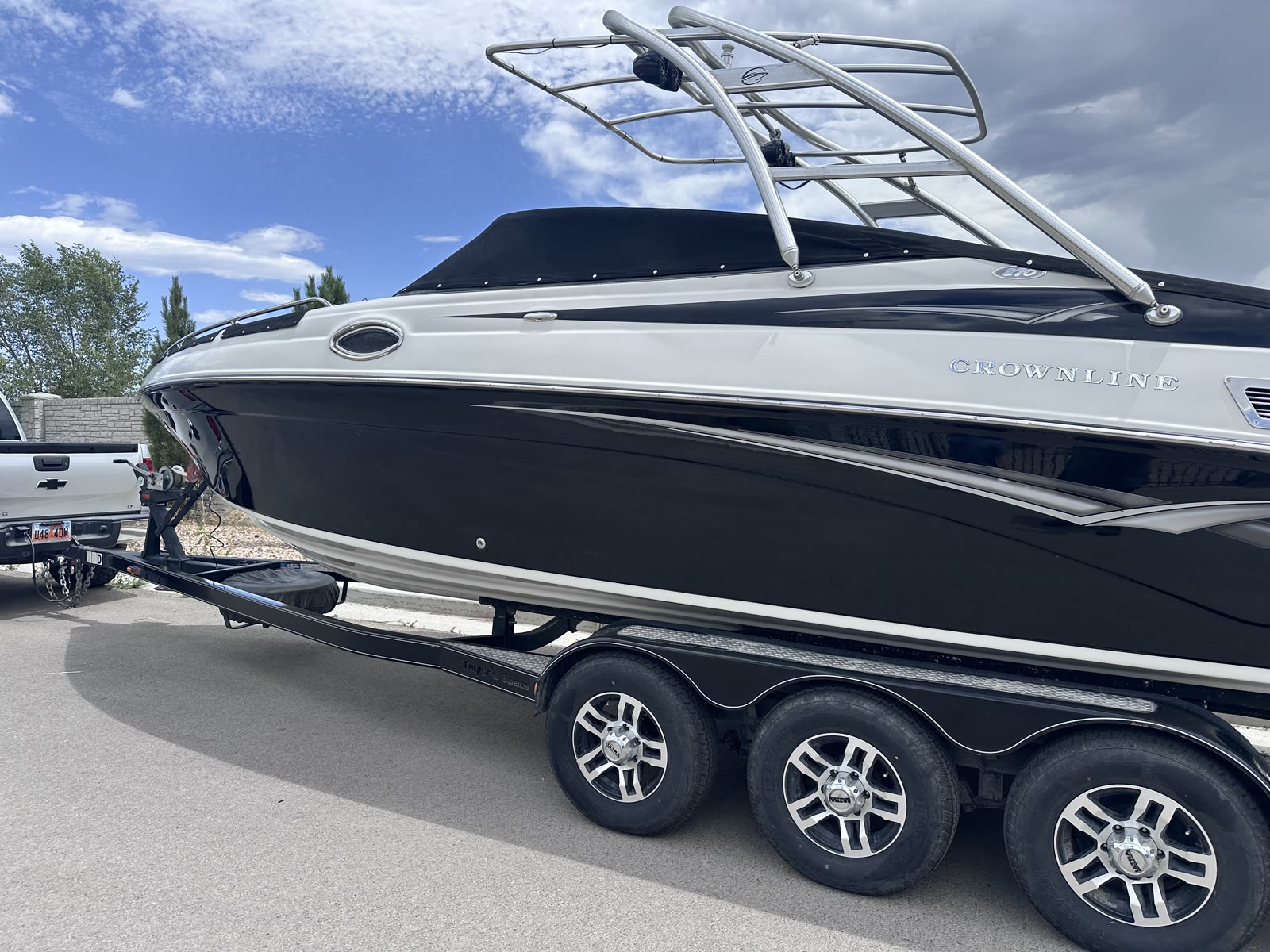
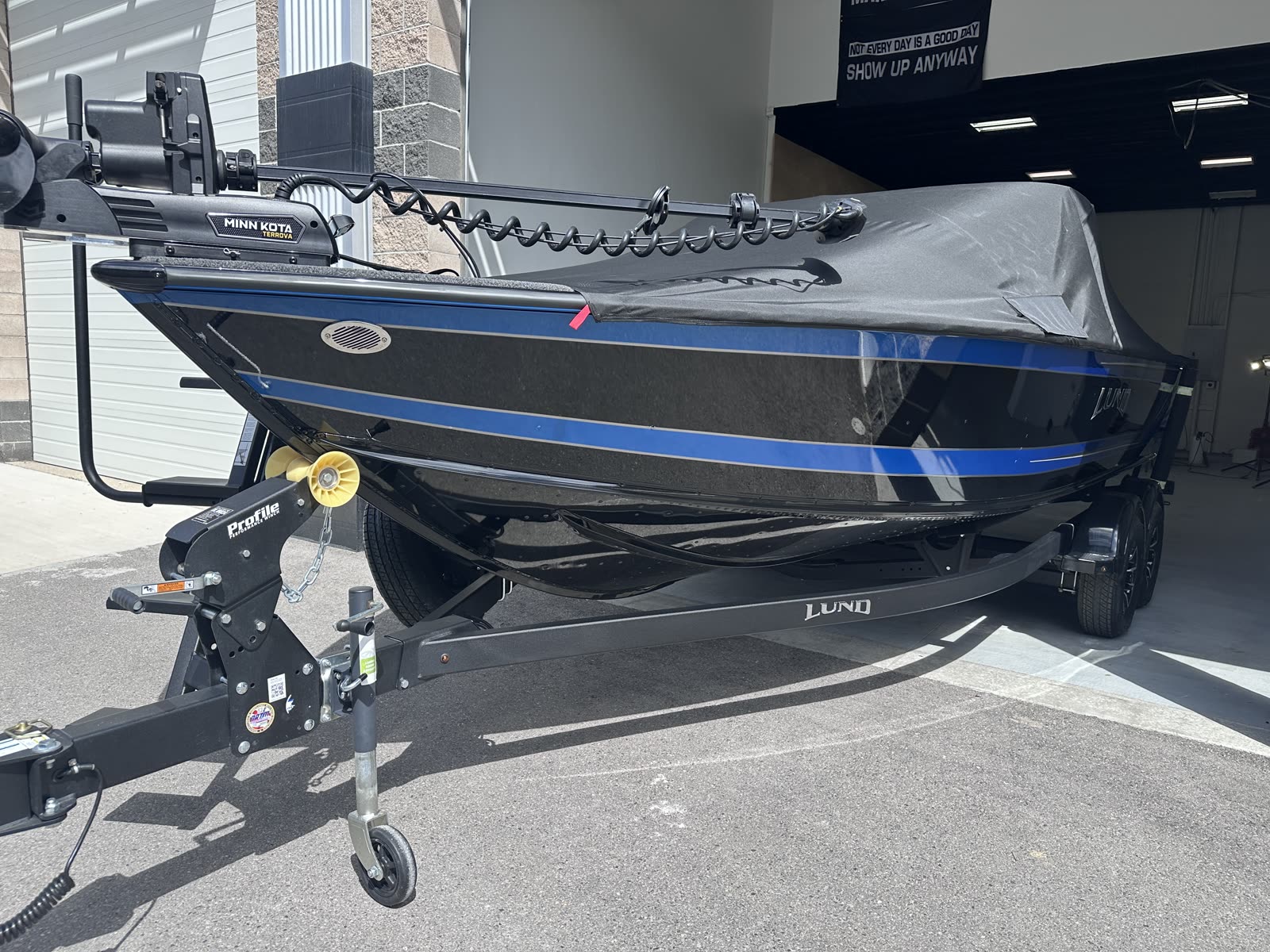
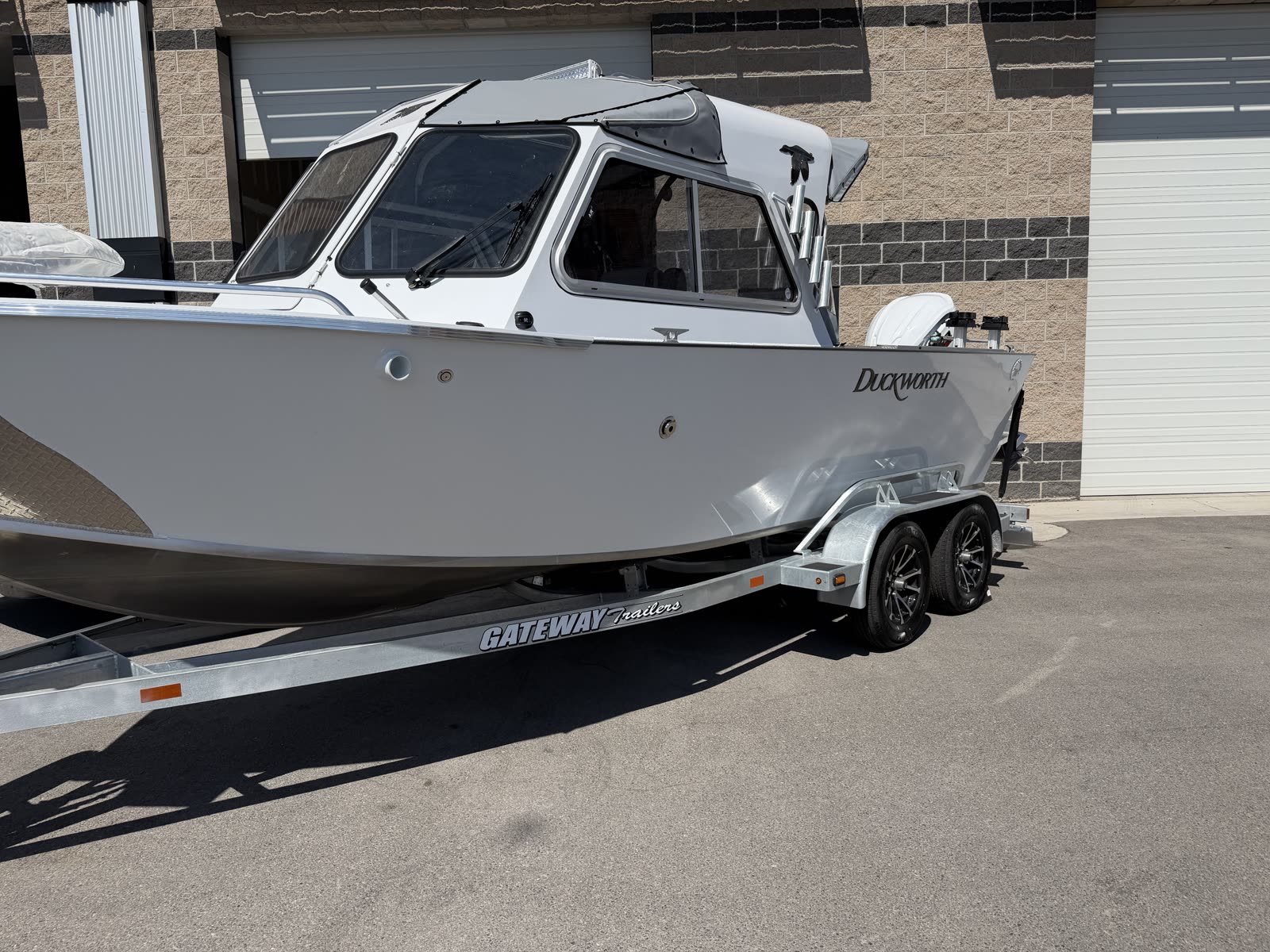
Wake boats, cruisers, and aluminum fishing rigs. Every one of these is a Utah boat we've had in the shop — not stock photography.
We come look at your boat, wherever it's parked. Fifteen minutes, no obligation.
Exact coverage, exact price, in writing. No surprises and no pressure.
One to three days at our shop. Drop it off, or we'll arrange pickup. We register the manufacturer's 3-year warranty for you before you leave.
Yacht Armor carries a three-year limited warranty from Yacht Shield, LLC, valid only on film installed by a certified dealer. Here's what it covers, what it doesn't, and what the manufacturer requires of the owner to keep it in force.
If any of those occur, the manufacturer covers the material. We install the replacement film under that claim when the manufacturer approves it.
The manufacturer's warranty requires two things from the owner: registration within 30 days of install, and an annual inspection by a certified installer. Miss either and coverage can void. That is their rule, not ours.
Registration: we register the warranty for you at handoff. That is part of the install. Keep the confirmation the manufacturer sends you.
Annual inspection: that stays on you to book. We can do it — at the shop or at your place, when you schedule it — and we'll remind you when we can. A missed year is not something we can fix after the fact, and it is not a promise that we will catch every calendar.
One thing to know: the warranty isn't transferable. It stays with the original owner and doesn't follow the boat if you sell. The finish still holds — which is where most of the resale benefit is — but the coverage doesn't come along with it.
Full terms are published by the manufacturer at getyachtarmor.com/pages/guarantee. Summary above is ours; the manufacturer's document governs.
The first Marine Protection Film designed specifically for a marine environment. The material has been lab-tested in wet and extreme-UV conditions. It's a trusted solution for oxidation, scuffs, swirls, marring, and light scratches.
Yes and no. PPF — paint protection film — is the category, and Yacht Armor is a marine PPF. What matters is which one is actually going on your boat.
Automotive PPF was engineered for a truck hood: air, road grit, the occasional rainstorm. Yacht Armor was engineered for a hull that sits in water — different adhesive, different topcoat, different behaviour under constant UV and mineral load. Most shops quoting boat wraps reach for car film because it's what they already stock. Ask whoever is quoting you which one they mean.
Yacht Armor is rated for 5–7 years with proper maintenance and care. The manufacturer's limited warranty runs three years from installation and covers cracking, bubbling, and yellowing — see the guarantee section above for what's included and what isn't.
Three years against cracking, bubbling, and yellowing — manufacturing defects in the film itself. It does not cover scratches, chips, hard water spots, walking areas, or anything at or below the waterline, and it doesn't apply to commercial vessels.
It requires an annual inspection by a certified installer, and registration within 30 days of install. Miss either and the manufacturer can void coverage. We register the warranty for you at handoff. The yearly inspection is yours to book — we will do it when you schedule it with us.
No — it stays with the original owner. The film still holds the finish, which is where most of the resale benefit comes from, but the coverage itself doesn't follow the boat.
The film's surface resists mineral bonding far better than raw gelcoat, so hard water rinses off instead of etching in. It won't make spotting impossible — nothing will — but it means a rinse handles what used to take a wet sand.
Especially then. Trailer miles are where rock chips and road grime do their damage, and long storage is where oxidation quietly sets in. Trailered boats often see more finish damage per season than slipped boats do.
Depends what's bothering you. Ceramic is a chemical layer a few microns thick — it makes water sheet off, keeps hard-water minerals from bonding, and cuts washing down to minutes. It covers the full exterior from $1,530, holds 12–18 months left alone, and considerably longer with an annual rejuvenation. Film is a physical layer measured in mils that takes rock chips, heals its own scratches, and lasts 5–7 years — but you're covering specific panels, not the entire outside of the boat.
If your boat is newer and you want the finish to survive a decade, film on the high-impact panels. If you want the whole exterior looking wet with almost no effort, ceramic. Plenty of owners do film on the transom and ceramic everywhere else — around $3,300 — and that combination covers the most ground for the money. Neither one includes the interior; that's quoted separately.
A helm screen protector, $149 installed. It fits Garmin, Simrad, Furuno, and Raymarine displays, cuts glare, and takes the scratches your MFD picks up from sunglasses, keys, and spray. It's under an hour of work, and it's the easiest way to see the material in person before committing to a hull.
Basic wash and dry is all it needs. Use a pH-neutral marine soap, which won't hurt the nano coating on the film. Every one to three months depending on use, an SiO2 spray topper keeps the film protected and hydrophobic.
Yes. There's nothing wrong with applying over defects, though a small air pocket may be visible around a chipped area. Application also protects the surface from further damage.
At the end of the film's life, removal is similar to removing a vinyl wrap — a heat gun and some patience. It leaves minimal adhesive behind and the surface underneath comes out fresh.
Yes. Film goes on any smooth surface — gelcoat or painted aluminum. We've done Lunds and Duckworths alongside the wake boats. On a fishing rig the panels that matter are usually different: gunwale caps where rods and pliers get dragged, and the bow, which takes anchor strikes and gets sand-blasted on the drive to Flaming Gorge or Strawberry. We'll walk your boat and tell you which panels are actually worth doing.
It's the most common worry we hear, and it's the one Rick raises in his video above — he expected the film to take some shine off. It doesn't. The material is optically clear and low-profile, so the finish reads as deeper rather than duller. Rick's brother saw the boat on a sunny morning and called him to say it was glistening. That's the usual reaction.
Ask them one question: is it automotive paint protection film? Most shops wrapping boats are using car PPF, because it's what they stock and what they know. It's a good material for a truck — it was engineered for something that lives in the air and gets rained on occasionally.
A boat sits in water carrying minerals and algae, under UV bouncing back off the surface. Yacht Armor is one of the only films actually engineered for that. It isn't the same product, and the price difference usually reflects which one you're getting.
It was — Yacht Armor was developed in Florida for offshore boats, and that's a harder environment than anything in Utah. That's the point. A film specified to survive salt has plenty of margin left for what our lakes actually throw at a hull: high-altitude UV and heavy mineral content. You're getting a product that's overqualified for the job, not one that's stretched to cover it.
Depends on the service. Film installs happen at our shop — the material has to go on in a controlled, dust-free environment, and anyone who tells you they'll wrap your hull in a driveway is going to trap grit under the film permanently. Boat detailing and ceramic coating we'll do at your location: Heber, Midway, and Park City up in Wasatch County, and anywhere across Wasatch, Summit, Salt Lake, and Utah Counties — Lehi, Riverton, Eagle Mountain, Saratoga Springs, Sandy, Alpine, and Bluffdale.
Spring is the right time — film goes on best over a clean, unweathered hull, before the season puts another summer of Utah sun into your gelcoat.